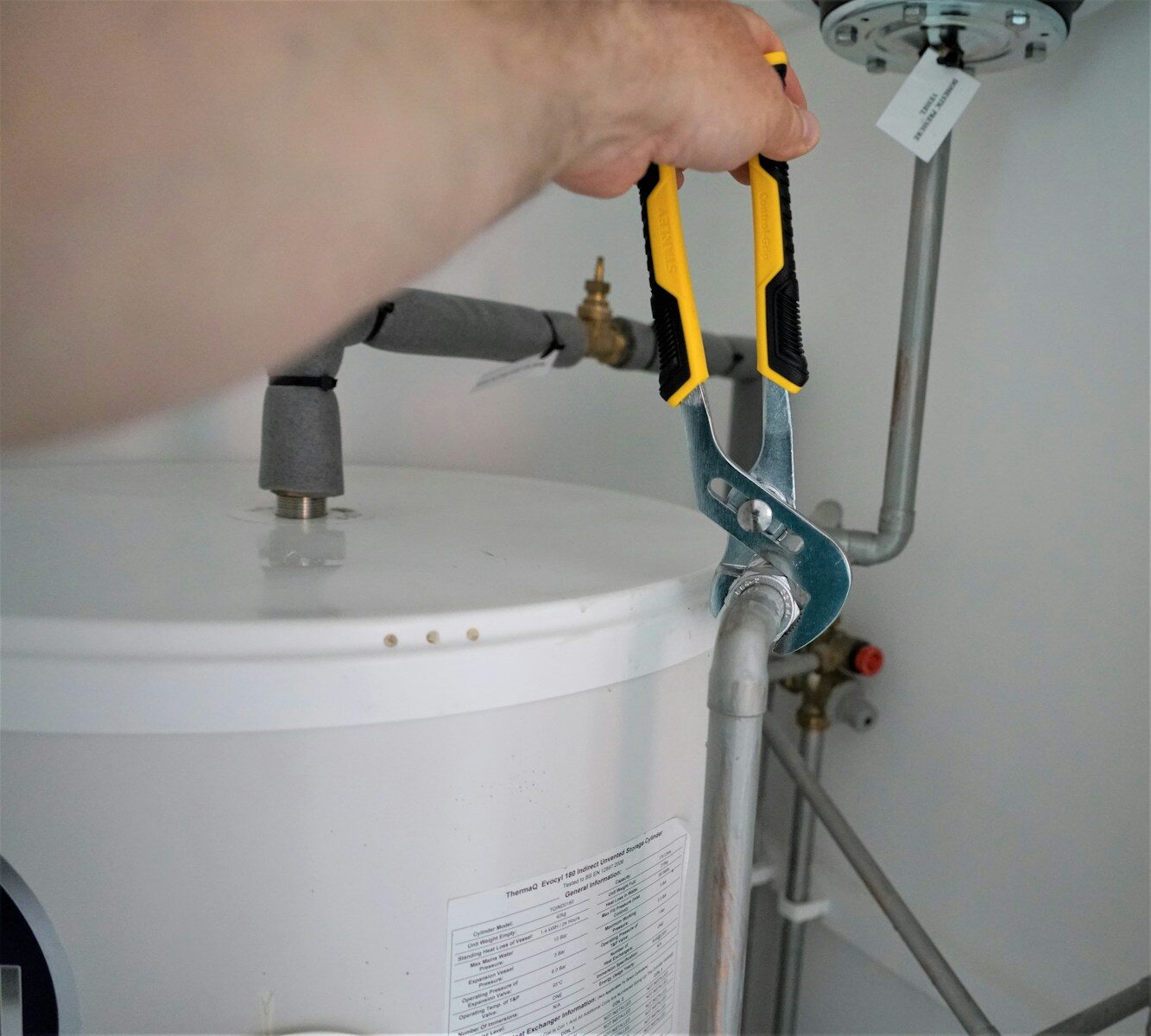
Water Heater Leaking From Bottom in Sandy Springs, GA
Licensed Sandy Springs technicians diagnose the cause, explain your options, and give you a written quote before any work begins. Service fee waived with repair approval.
If your water heater shows this problem, you are not alone. It is one of the most common reasons Sandy Springs homeowners call us, and in many cases it can be fixed in a single visit. Learn what to look for, what you can safely check, and what a professional repair involves. You can also read about our full water heater repair service.
What It Looks Like and Why It Happens
What It Looks Like
- Visible water pooling around the base of the heater
- Decreased hot‑water output
- Unusual rust or mineral deposits on the tank exterior
- Unusual noises (hissing or popping) before the leak starts
Why It Happens
- Sediment buildup causing corrosion and perforation of the tank wall
- Failure of the temperature/pressure (T&P) relief valve, allowing excess pressure to force water out through the bottom
- Physical damage or age‑related fatigue of the tank’s internal lining, leading to cracks
- Improper installation (e.g., missing drain pan) that masks early leaks
How a Technician Diagnoses It
We start with the symptoms you describe, then test the power, controls, and the parts most likely to cause the problem, so the repair targets the real cause instead of guessing.
What We Check First
- Power supply, controls, and error signals
- Airflow, water flow, or gas supply, depending on the appliance
- The wear parts most often tied to this symptom
- Safety devices and sensors that can shut the appliance down
Safe Checks You Can Try Before You Call
- Confirm the thermostat is set to a safe, moderate temperature.
- For gas models, check whether the pilot is lit or the igniter is working.
- Check the breaker for electric models.
- Look around the tank for moisture or drips.
- Confirm shutoff valves are open.
- Note any rumbling or popping noises.
Safety First
If you smell gas, leave immediately and call the gas utility. A leaking tank should be shut off at the water supply and power.
What Happens During Your Visit
1. Listen and Inspect
We ask what you have noticed and inspect the appliance and its connections.
2. Find the Cause
We test the likely parts and confirm exactly what has failed.
3. Written Quote
You get a clear written quote before any work begins. Service fee waived with repair approval.
4. Repair and Test
We complete the repair and run the appliance to confirm it works properly.
Parts We Commonly Replace
- Heating elements and thermostats
- Thermocouples and igniters
- Gas control valves
- Anode rods
- Pressure relief valves
- Dip tubes
- Drain valves
- Control boards
How to Prevent It From Coming Back
- Flush the tank once a year.
- Check the anode rod periodically.
- Test the pressure relief valve.
- Keep the area around the heater clear.
- Set the temperature at a safe, efficient level.
Why Sandy Springs Homeowners Call Us
- Licensed technicians who explain the problem in plain language
- A written quote before any work begins
- Service fee waived with repair approval
- Local service across Sandy Springs and nearby neighborhoods
- Honest repair-or-replace guidance
Need This Fixed in Sandy Springs?
Call or request service online and a technician will get your water heater working again.
Frequently Asked Questions
Can I simply tighten the fittings to stop the leak?
Tightening may temporarily reduce a minor leak, but if the tank wall or T&P valve is compromised, the issue will recur and can cause water damage.
How long does a leaking water heater typically last before the tank fails?
Once water is escaping from the bottom, the tank’s structural integrity is already compromised; failure can occur within days to weeks.
Is a leaking water heater covered by homeowner’s insurance?
Many policies cover resulting water damage, but the heater itself is usually considered wear‑and‑tear and not covered.
Can I replace just the T&P valve to fix the leak?
If the valve is the sole cause, replacement may stop the leak, but a thorough inspection for corrosion or tank damage is essential.
What maintenance can prevent future leaks?
Annual flushing to remove sediment, periodic T&P valve testing, and installing a drain pan with a leak‑detect sensor are best practices.
Why is there no hot water?
A failed element, thermostat, or igniter, or a tripped breaker, are common causes.
Why does my water heater make noise?
Sediment buildup in the tank is the usual cause.
Can a leaking tank be repaired?
Leaks from fittings often can, but a leaking tank usually needs replacement.