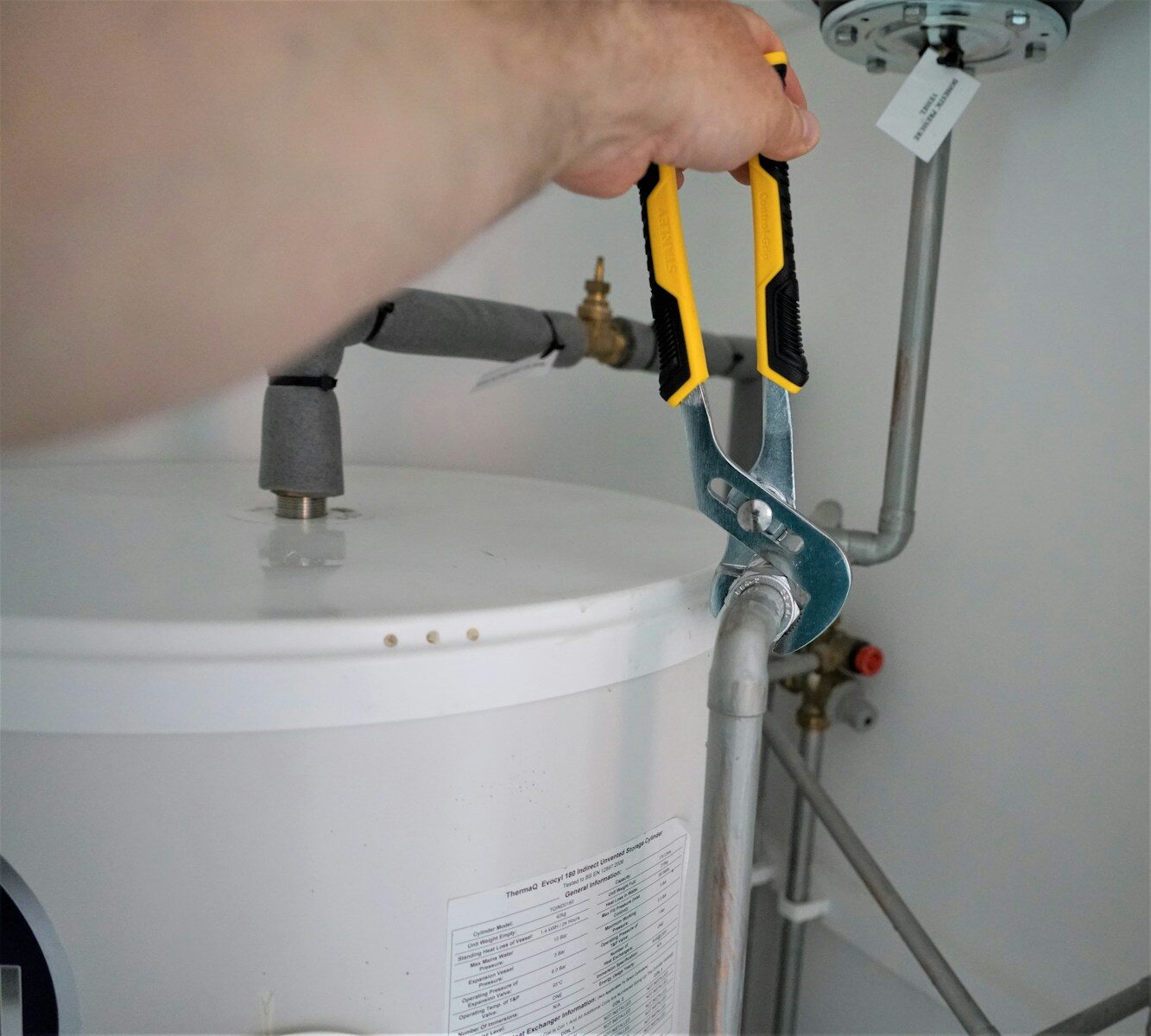
Water Heater Leaking in Sandy Springs, GA
Licensed Sandy Springs technicians diagnose the cause, explain your options, and give you a written quote before any work begins. Service fee waived with repair approval.
If your water heater shows this problem, you are not alone. It is one of the most common reasons Sandy Springs homeowners call us, and in many cases it can be fixed in a single visit. Learn what to look for, what you can safely check, and what a professional repair involves. You can also read about our full water heater repair service.
What It Looks Like and Why It Happens
What It Looks Like
- Visible water pooling around the base of the heater
- Dripping or steady stream from the tank, valves, or connections
- Rust‑colored water in the hot‑water tap
- Unusual sounds such as hissing or gurgling
- Decreased hot‑water pressure or temperature
- Musty or metallic odor near the unit
Why It Happens
- Corroded or cracked tank due to age or poor water quality
- Loose or deteriorated pipe fittings and pressure‑relief valve
- Faulty temperature‑pressure (T&P) relief valve releasing excess pressure
- Leaking dip tube or inlet/outlet connections
- Improper installation causing stress on seams
- Excessive water pressure from the home’s supply system
How a Technician Diagnoses It
We start with the symptoms you describe, then test the power, controls, and the parts most likely to cause the problem, so the repair targets the real cause instead of guessing.
What We Check First
- Power supply, controls, and error signals
- Airflow, water flow, or gas supply, depending on the appliance
- The wear parts most often tied to this symptom
- Safety devices and sensors that can shut the appliance down
Safe Checks You Can Try Before You Call
- Confirm the thermostat is set to a safe, moderate temperature.
- For gas models, check whether the pilot is lit or the igniter is working.
- Check the breaker for electric models.
- Look around the tank for moisture or drips.
- Confirm shutoff valves are open.
- Note any rumbling or popping noises.
Safety First
If you smell gas, leave immediately and call the gas utility. A leaking tank should be shut off at the water supply and power.
What Happens During Your Visit
1. Listen and Inspect
We ask what you have noticed and inspect the appliance and its connections.
2. Find the Cause
We test the likely parts and confirm exactly what has failed.
3. Written Quote
You get a clear written quote before any work begins. Service fee waived with repair approval.
4. Repair and Test
We complete the repair and run the appliance to confirm it works properly.
Parts We Commonly Replace
- Heating elements and thermostats
- Thermocouples and igniters
- Gas control valves
- Anode rods
- Pressure relief valves
- Dip tubes
- Drain valves
- Control boards
How to Prevent It From Coming Back
- Flush the tank once a year.
- Check the anode rod periodically.
- Test the pressure relief valve.
- Keep the area around the heater clear.
- Set the temperature at a safe, efficient level.
Why Sandy Springs Homeowners Call Us
- Licensed technicians who explain the problem in plain language
- A written quote before any work begins
- Service fee waived with repair approval
- Local service across Sandy Springs and nearby neighborhoods
- Honest repair-or-replace guidance
Need This Fixed in Sandy Springs?
Call or request service online and a technician will get your water heater working again.
Frequently Asked Questions
Can I patch a leaking water heater tank?
Temporary patches may stop a small drip, but they are not a permanent fix. A cracked tank requires full replacement for safety and efficiency.
How quickly should I address a water heater leak?
Immediately. Even a slow leak can cause water damage, mold growth, and increase the risk of a catastrophic tank failure.
Will my warranty cover a leaking tank?
Warranty coverage depends on the manufacturer and age of the unit. Provide the model and serial number to the technician for verification.
Is it safe to keep the heater running with a leak?
No. Continuing to operate a leaking heater can cause electrical hazards (electric models) or gas leaks (gas models) and exacerbate water damage.
What should I do with the water that has leaked?
Turn off the water supply, mop up excess water, and ventilate the area. If flooding is extensive, consider contacting a water‑damage restoration service.
Why is there no hot water?
A failed element, thermostat, or igniter, or a tripped breaker, are common causes.
Why does my water heater make noise?
Sediment buildup in the tank is the usual cause.
Can a leaking tank be repaired?
Leaks from fittings often can, but a leaking tank usually needs replacement.